
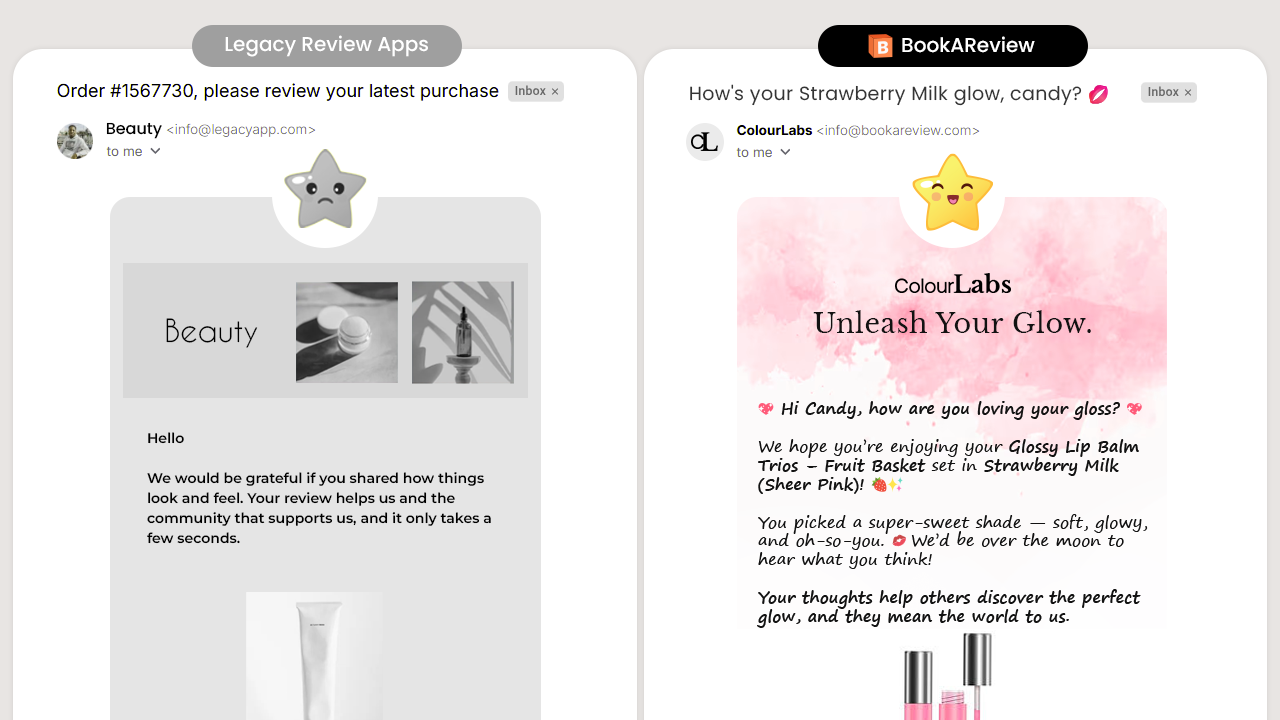
Personal connection
It opens with a personalized touch about the specific product (Men’s Motion Jogger) and asks about a specific feature (the extra spring), showing the sender knows what the customer purchased and cares about their experience.
Emotional appeal
The message emphasizes how the customer’s feedback “means the world” and “fuels my passion,” creating a more personal, human connection that makes the reader feel valued.
Community focus
It frames the review as being part of a community that “values every stride,” making the customer feel like they’re contributing to something bigger.
Visual warmth
The use of emojis (😊, 💗) adds personality and warmth without being excessive. In contrast, Review Request B feels more generic and transactional — it’s a standard template that could apply to any product or customer. While it’s clear and professional, it lacks the personal touch and emotional engagement that would motivate someone to take action.
The first email makes the customer feel special and part of a story, while the second feels like just another automated request. That personal investment makes Review Request A much more likely to get a response.
Like what you’re reading?
Get the latest stories and announcements